A patient recently shared that she lost weight—after taking a three-week break from her intense workout routine. She kept up her daily steps (staying in the fat-burning zone) but dropped the high-intensity cardio.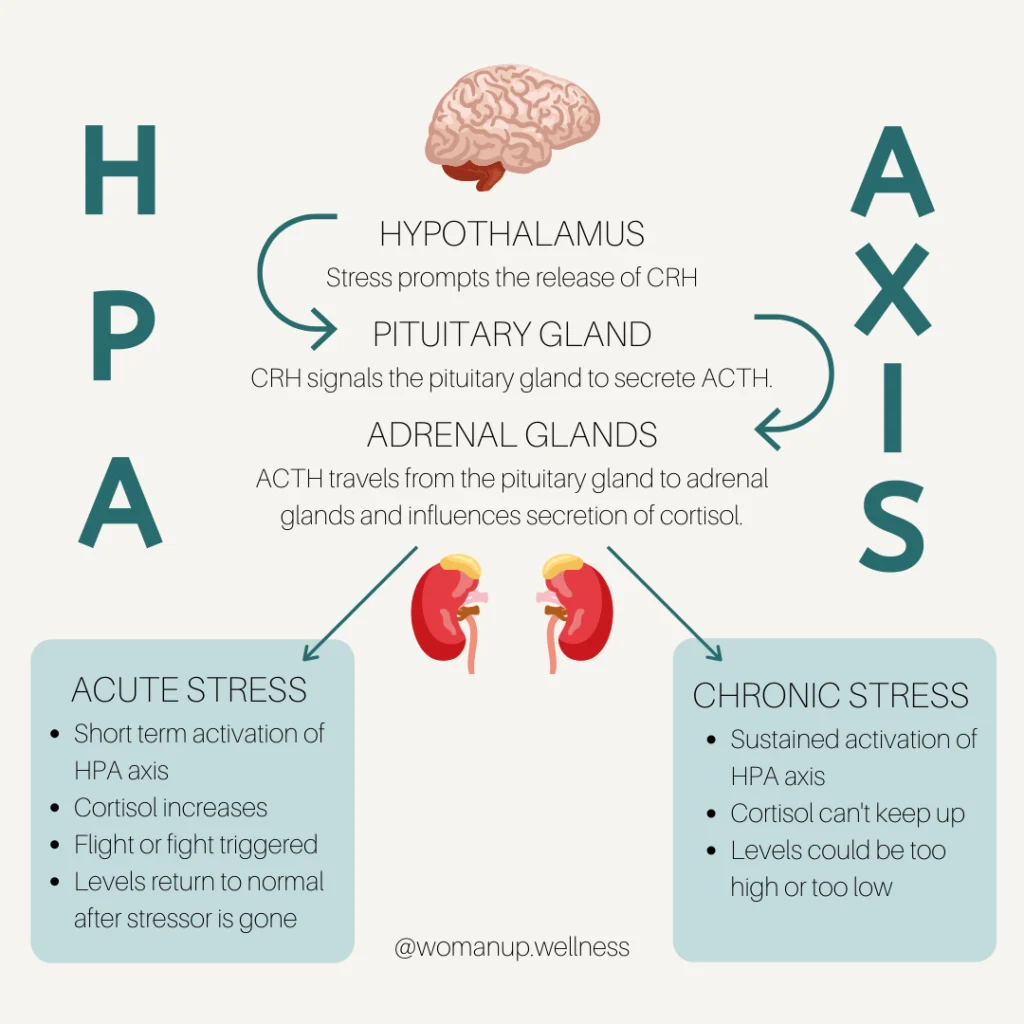
What surprised both of us was that her HPA-axis dysregulation resulting from chronic stress no longer seemed like a major issue. Her sleep was stable, energy was strong, and the classic “stress symptoms” like fatigue, anxiety, heart palpitations, and irritability were long gone. We had assumed her system was fully recovered.
But her body told a different story. Once she rested, her weight started to shift—proof that sometimes the nervous system is still working harder than it appears.
The adrenal glands and the HPA axis (the communication line between the brain and adrenal glands) play a huge role in this story. They help regulate our response to stress—physical, emotional, or environmental. When this system is pushed too long or too hard, it adapts by prioritizing survival over fat loss, muscle repair, and hormone balance. Cortisol, the main stress hormone, can become dysregulated—too high, too low, or fluctuating unpredictably. The result? A body that holds on tightly to weight, despite doing “everything right.” Sometimes the real medicine isn’t another supplement or workout plan—it’s deep, consistent rest. The kind that allows the body to truly reset.
What this teaches us:
-
Pushing harder doesn’t always mean better results.
-
“Improved” isn’t always the same as “optimal.” Ongoing symptoms—like stubborn weight—can be signals that the body still needs deeper repair.
-
Rest is not laziness. In a world that glorifies hustle, rest is often the most productive thing you can do for your metabolism, hormones, and healing.